Corn Grain Conveyor Feeder Elevator Equipment
Corn grain conveyor feeder elevator equipment is used for transporting, feeding and elevating corn and other grains in Grain Silo, feed mill and grain processing plant.
RODUCT DESCRIPTION
Description
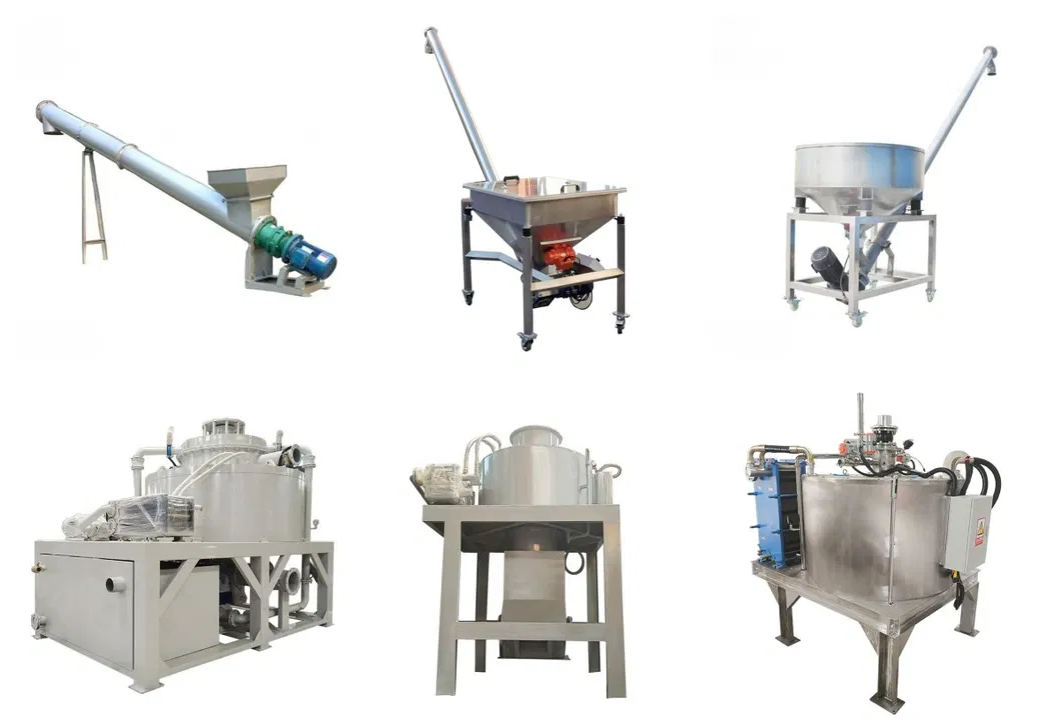
The screw feeder uses spiral blades to push the dried powder and small granular materials forward to achieve the effect of conveying.
It is widely used in metallurgy, building materials, chemical, food and other industries.
Applicable materials: various dry powder materials, granular materials, crushed materials, flake materials, biological particles, etc.
Different Types of the Screw Conveyor According to the conveying method, there are the screw conveyor with shaft and screw conveyor without shaft.
For the screw conveyor without shaft, it is
recommended to be placed horizontally with an
inclination angle<20°. It is suitable for the sticky,
entangled and massive materials such as sludge and domestic garbage.
According to the shape, there are the tube type screw conveyor and U groove
type screw conveyor.
Technical Parameters
Model NO. | ALT-SF5520 |
Structure | Conveyor System |
Material | Stainless steel |
Material Feature | Heat Resistant, Fire Resistant |
Application | Chemical Industry, Grain Transport, Mining Transport, Power Plant |
Condition | New |
Product Name | Wear Resistance Vertical Screw Lift Conveyor and feeder |
Applicable Industries | Manufacturing Plant, Food & Beverage Factory... |
Machinery Test Report | Provided |
Core Components | Motor, Other, Gear, Engine |
After-Sales Service Provided | Installation Documents, Online Support etc |
Transport Package | Wooden Box |
Specification | can be customized |
Trademark | Aelt |
Origin | China |
HS Code | 8428320000 |
Production Capacity | 10000 |
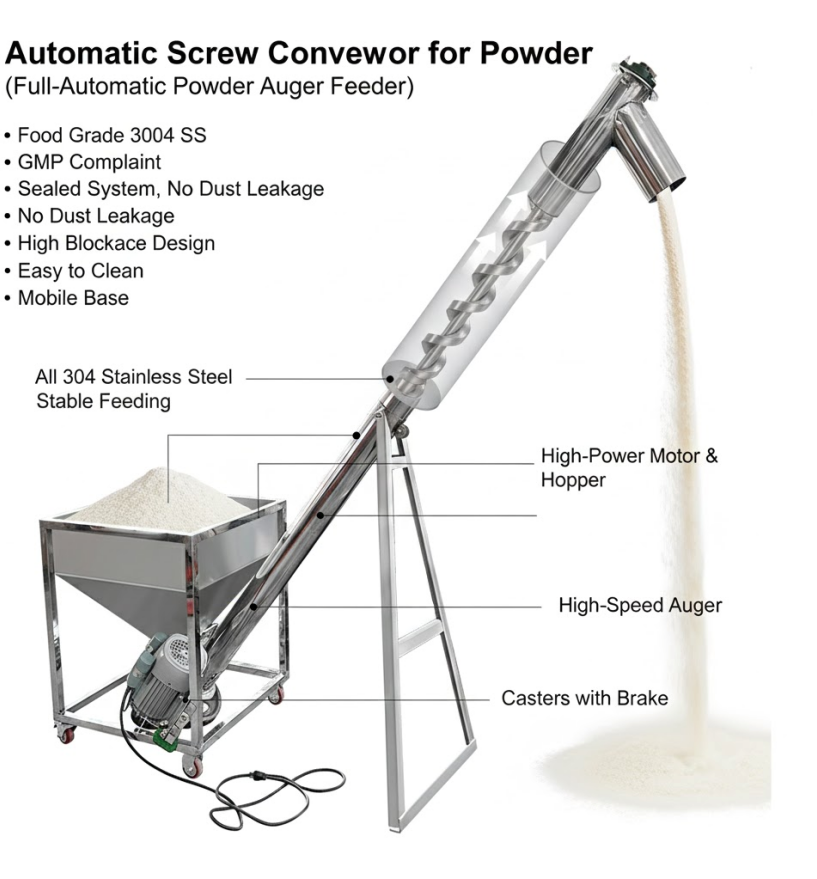
Features:
1. Convenientandsimple operation
2. Wide application
3. Energy saving and lower noise
4. Long service life
5. Easy maintenance
FAQ
Q: How about payment term, payment safety and delivery time?
A: We accept 40% deposit, balance before shipment. And Irrevocable L/C at sight.Delivery time is 7 to 30 days. It is according to order quantity.
Q: How could we confirm the products?
A: Our professional engineers will follow up all the designs and ajustments according to your requirement.OEM and ODM available.
Q: What services can we provide?
A:Accepted Delivery Terms: FOB,CFR,CIF,EXW,DDP,DDU,Express Delivery;
Accepted Payment Currency:USD,EUR,CNY;
Accepted Payment Type: T/T,L/C,Credit Cardl,Western Union,Alipay;
Q: How can I know your machine works well?
A: Before delivery, we shall test the machine working condition for you.
Q: What's your MOQ?
A: 1 set.
Conveying Feeder Equipment: Complete Guide to Industrial Material Handling Solutions
Conveying Feeder equipment plays a vital role in modern industrial operations, streamlining material handling processes, improving efficiency, and reducing labor costs. From bulk solids to packaged goods, these systems are indispensable in factories, warehouses, and production lines across multiple industries. This guide covers definitions, types, benefits, specifications, and best practices, providing a thorough reference for engineers, operators, and decision-makers.
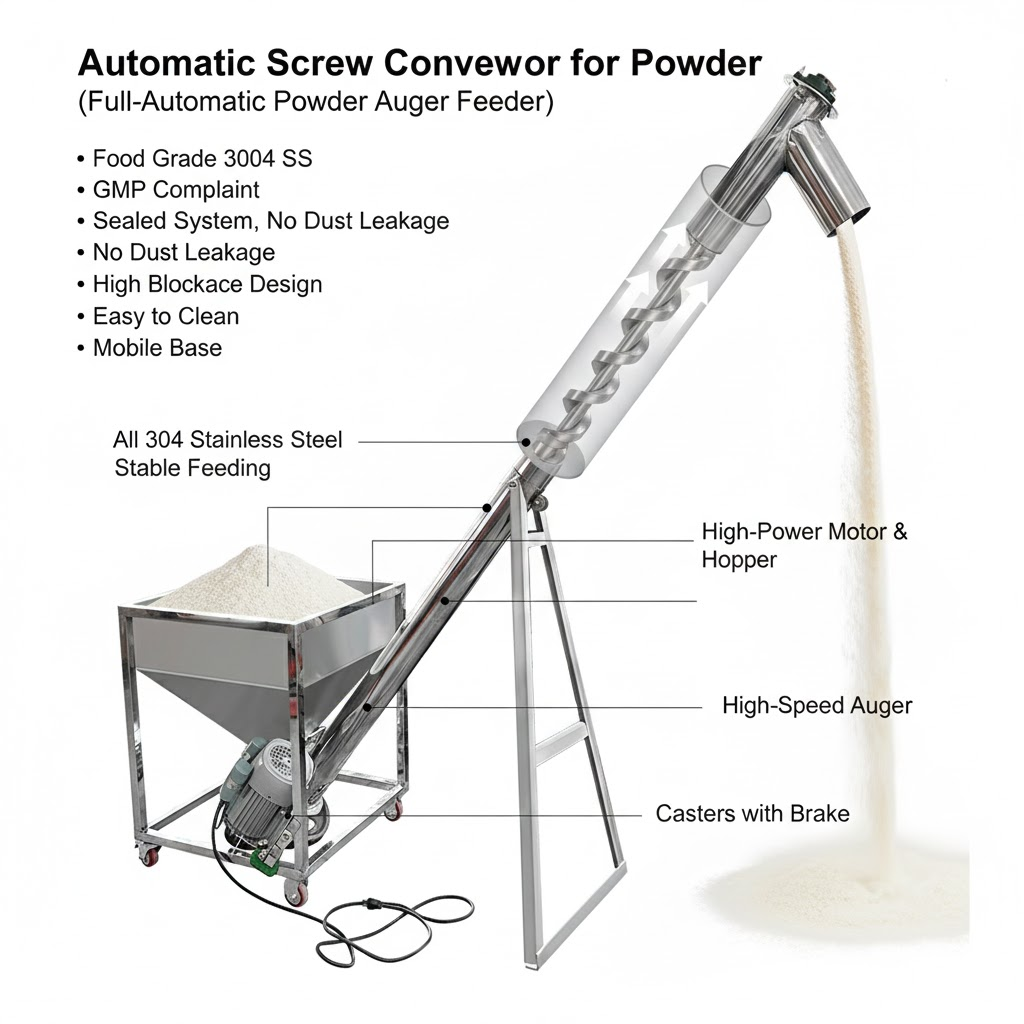
Conveying equipment refers to machinery and systems designed to transport materials from one location to another efficiently. These systems are essential in production, warehousing, mining, and logistics, allowing consistent and safe movement of bulk, granular, powdery, or packaged materials.
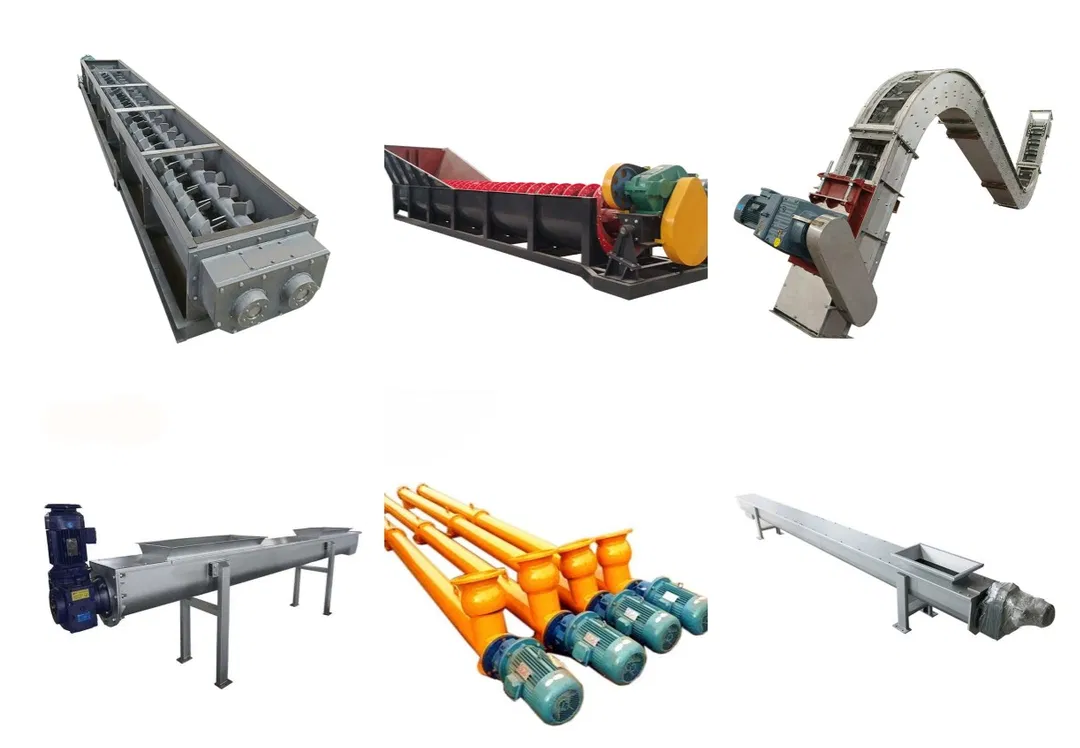
Key components of conveying equipment typically include:
·
Conveyor belts
·
·
Screw Conveyors
·
·
Roller conveyors
·
·
Bucket elevators
·
·
Chain conveyors
·
·
Hoppers and chutes
·
The primary goal is to ensure smooth, continuous flow while minimizing material damage and labor-intensive handling.
Keywords: Industrial Conveying Equipment, Material Handling Solutions, Bulk Transport Systems
2. Types of Conveying Equipment
2.1 Belt Conveyors
Belt conveyors are one of the most common types of conveying equipment. They consist of a continuous belt loop, driven by pulleys, transporting materials over short or long distances.
Advantages:
·
Handles heavy and bulky materials
·
·
Smooth continuous transport
·
·
Suitable for inclined or horizontal movement
·
·
Low operational cost
·
Applications: Food processing, packaging, mining, bulk material handling.
2.2 Screw Conveyors
Screw conveyors, also called auger conveyors, move materials via a rotating helical screw inside a tube or trough.
Advantages:
·
Efficient for granular and powdery materials
·
·
Can operate horizontally, vertically, or at an incline
·
·
Compact footprint
·
·
Easy to integrate into production lines
·
Applications: Cement, grain, food, chemical powders.
2.3 Roller Conveyors
Roller conveyors use cylindrical rollers, either powered or gravity-fed, to move materials. They are commonly used in warehouses and packaging facilities.
Advantages:
·
Ideal for boxes, pallets, and packaged goods
·
·
Low maintenance
·
·
Easy to install and modify
·
·
Reduces manual handling
·
Applications: Distribution centers, airports, assembly lines.
2.4 Bucket Elevators
Bucket elevators transport bulk materials vertically using buckets attached to belts or chains.
Advantages:
·
Efficient vertical transport
·
·
Reduces floor space usage
·
·
Handles fragile or hot materials safely
·
Applications: Agriculture, mining, chemical industry.
2.5 Chain Conveyors
Chain conveyors use chains to pull or push materials along a track.
Advantages:
·
Suitable for heavy loads
·
·
Can handle hot or abrasive materials
·
·
High durability
·
Applications: Automotive, steel production, heavy manufacturing.
3. Key Benefits of Conveying Equipment
Benefit | Description |
Increased Efficiency | Reduces manual labor and speeds up material movement. |
Consistent Flow | Ensures uniform transport of bulk or packaged goods. |
Safety | Minimizes workplace injuries from lifting and moving materials. |
Scalability | Can be customized for different load capacities and industries. |
Energy Efficiency | Modern systems consume less power while maintaining high output. |
Reduced Material Damage | Controlled transport reduces breakage, spills, and contamination. |
4. Material Types Suitable for Conveying Equipment
·
Bulk solids: grains, ores, sand, cement
·
·
Powders: flour, chemicals, cement
·
·
Granulars: pellets, seeds, fertilizers
·
·
Packaged goods: boxes, cartons, crates
·
·
Fragile items: food products, glassware, electronics
·
Keywords: Bulk Material Conveyors, Industrial Conveyor Systems, Automated Material Handling
5. Specifications to Consider When Choosing Conveying Equipment
Specification | Importance |
Conveyor Length | Determines distance materials need to travel. |
Load Capacity | Ensures the system can handle required weight. |
Material Type | Influences choice of belt, screw, or chain conveyors. |
Speed | Adjusted to match production or warehouse throughput. |
Environment | Indoor, outdoor, wet, hot, or corrosive conditions. |
Power Requirements | Motor size and energy efficiency affect operational cost. |
Maintenance | Accessibility, ease of repair, and availability of spare parts. |
6. Best Practices for Installation and Operation
00001.
Conduct a material flow analysis before installation.
00002.
00003.
Select equipment suitable for load, distance, and material type.
00004.
00005.
Ensure proper alignment and tension for belts and chains.
00006.
00007.
Implement safety measures: emergency stops, guards, and sensors.
00008.
00009.
Schedule regular maintenance to prevent downtime.
00010.
00011.
Train staff for safe operation and troubleshooting.
00012.
7. Future Trends in Conveying Equipment
·
Automation Integration: Conveyors integrated with robotics and warehouse management systems.
·
·
Smart Sensors: Real-time monitoring of load, speed, and wear.
·
·
Energy Optimization: High-efficiency motors and regenerative drives.
·
·
Modular Designs: Easily expandable systems for evolving production needs.
·
·
Sustainable Materials: Eco-friendly belts, energy-saving motors, and recyclable components.
·
Keywords: Smart Conveying Equipment, Automated Material Handling, Industrial Conveyor Solutions
8. Common Industrial Applications
Industry | Application |
Food & Beverage | Transporting raw ingredients, packaging lines |
Mining & Minerals | Ore, coal, sand transport |
Agriculture | Grain handling, seed distribution |
Manufacturing | Assembly line transport, heavy parts movement |
Chemical & Pharmaceuticals | Powder, granules, and liquid packaging |
Warehousing & Logistics | Pallet and box transport, order fulfillment |
9. Maintenance Tips for Longevity
·
Lubricate moving parts regularly
·
·
Inspect belts, rollers, and screws for wear
·
·
Replace worn chains and bearings promptly
·
·
Clean systems to prevent contamination
·
·
Monitor motor and drive performance
·
10. Conclusion
Conveying equipment is an indispensable component of modern industrial operations. Its diverse types, from belt and screw conveyors to bucket elevators and chain systems, provide flexible solutions for material transport. Prioritizing efficiency, safety, and automation ensures industries can maintain high throughput, reduce labor, and minimize material loss. Investing in quality conveying equipment enhances overall operational performance.
 +86 29-87031531



 Phone
Phone