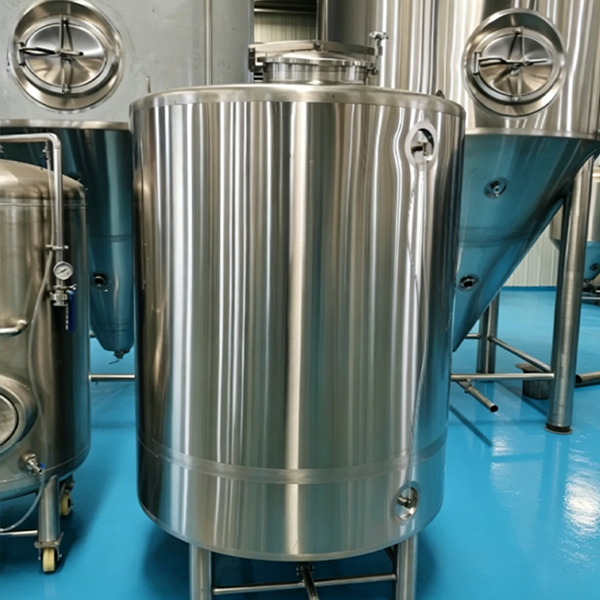
Customized Hot Water Tank Store Tank for Liqour Hot Liquor Tank with Heating
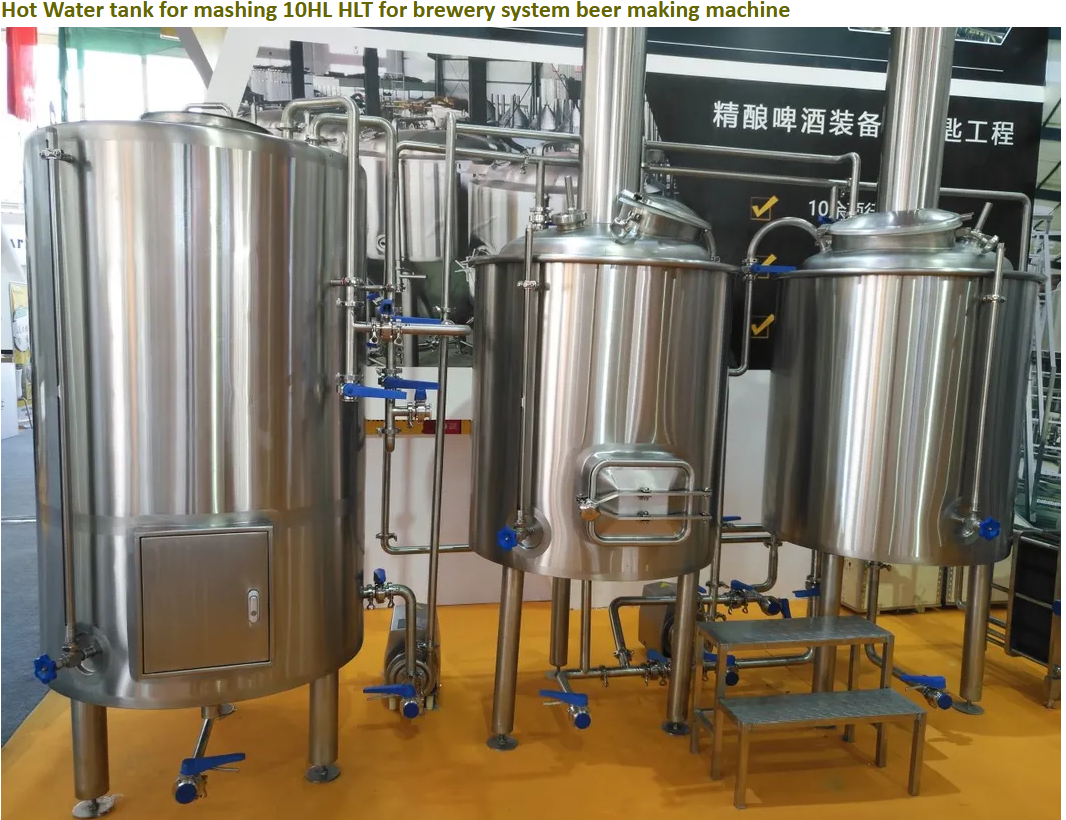
The hot liquor tank is a vessel used in beer brewing to store and heat water for mashing and sparging. It is also known as a hot water tank or HLT.
PRODUCT DESCRIPTION
Description
As the name suggests, a Hot Liquor Tank is a vessel used to heat and store the hot water used in brewing. This water is referred to as "liquor" in brewing terminology.
Its primary functions are:
1. Providing hot water for mashing:
Hot water at a specific temperature is mixed with crushed malt during the mashing process to convert the grain's starches into fermentable sugars.
2. Providing hot water for sparging:
After mashing, hot water is used to rinse the grain bed(sparging) to extract as much of the sugars as possible.
Core design points:
1. Heating Method:
-Electric heating element
-Steam heating jacket
-Direct gas fire heating
2. Insulation:
Must maintain water temperacture for extended periods to save energy and ensure stable mashing and sparging temperatures.
3. Temperature Control:
Must be equipped with a high-precision temperature probe and controller.
4. Material:
Food-grade 304 or 316 Stainless steel is the standard.
Corrosion-resistant, easy to clean, does not affect water quality.
5. Capacity:
Capacity should at least match the Mash Tun, often slightly larger, as it needs to hold both the mashing water and sparging water. (e.g., for a 500L batch, HLT capacity might be 1000L).
6. Sight Glass/Level Gauge:
Allows visual monitoring of water volume for precise control during mashing and sparging.
The Hot Liquor Tank is the "logistics commander" ensuring precise temperature control during the beer brewing precess. An efficient, well-insulated HLT with accurate temperature control significantly improves mashing efficiency,
leading to more consistent and higher-quality beer.
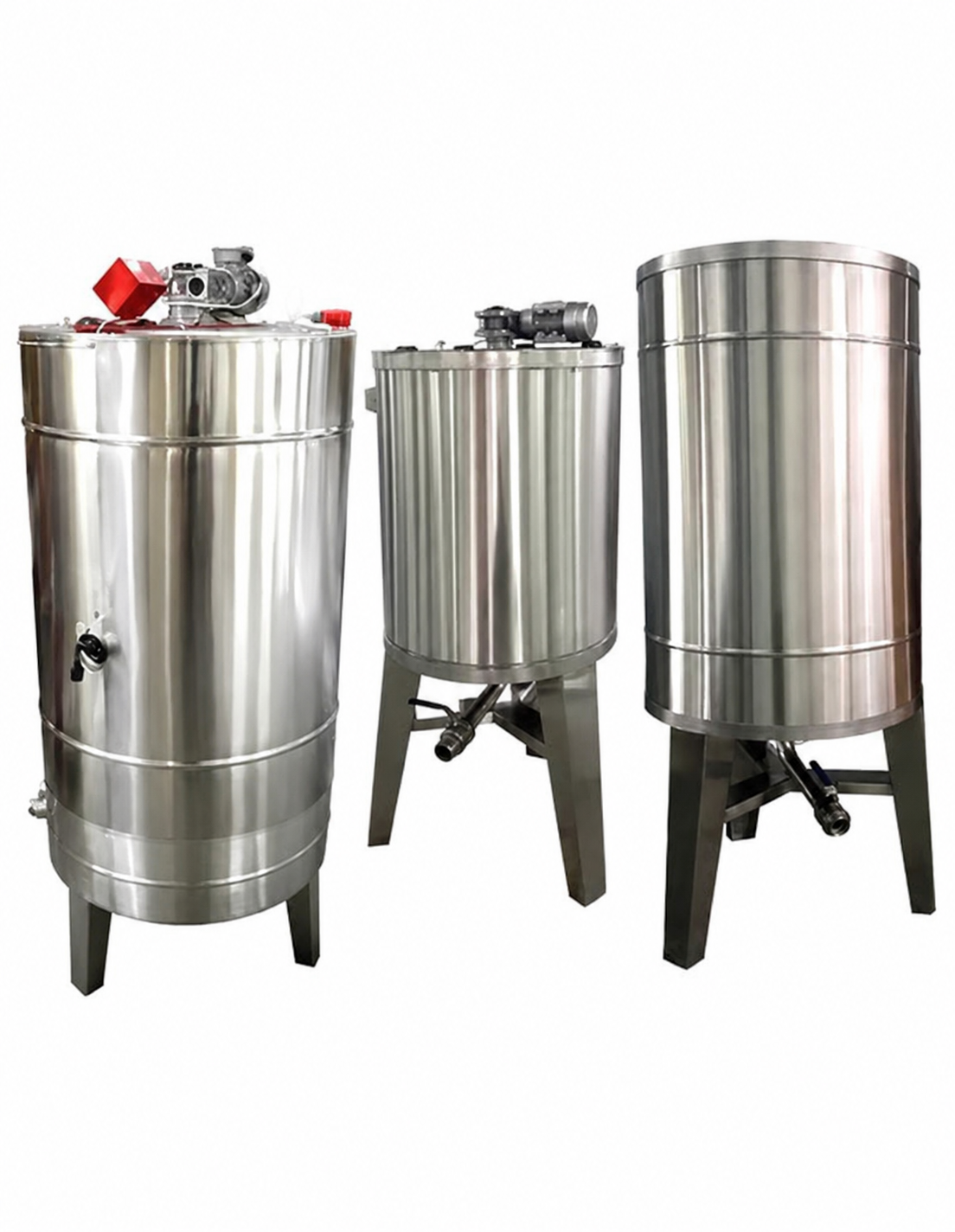
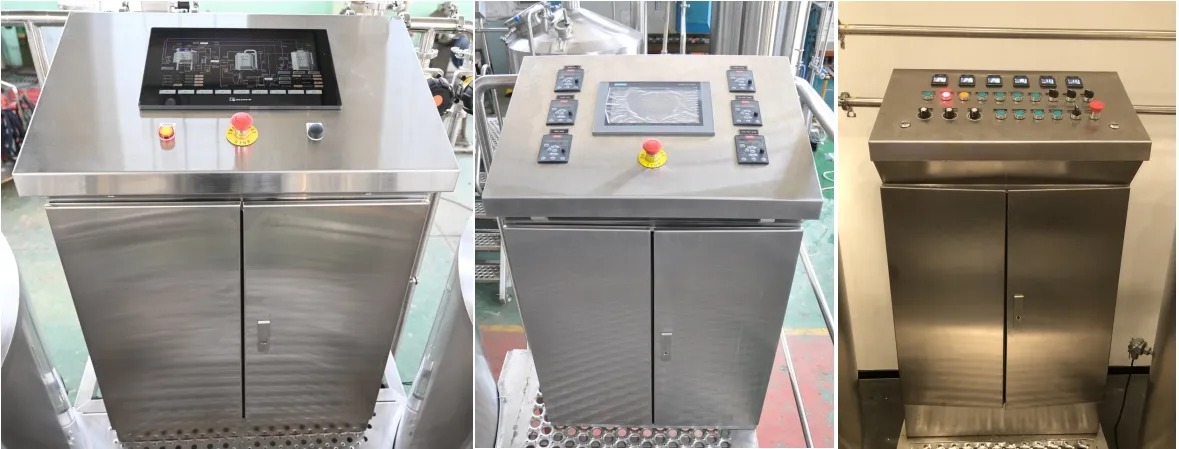
Aelt Professional Brewing Control System: push buttons control panel/PLC control panel (semi-automatic control/full-automatic control )
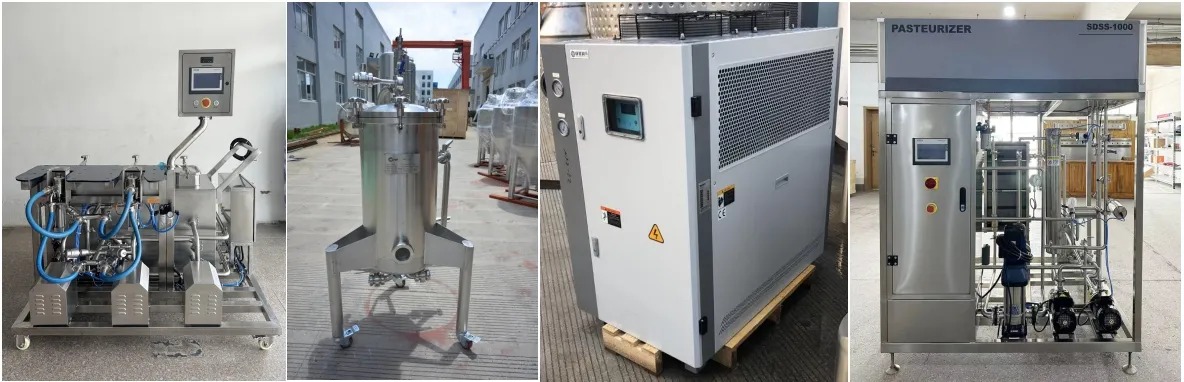
We also provides all auxiliary equipment for breweries, such as keg washing machines, bottle filler/cappers, Flash Pasteurizer, steam boiler, yeast brinks, hopgun, hops cannon, etc.
FAQ
Q: How about payment term, payment safety and delivery time?
A: We accept 40% deposit, balance before shipment. And Irrevocable L/C at sight.Delivery time is 7 to 30 days. It is according to order quantity.
Q: How could we confirm the products?
A: Our professional engineers will follow up all the designs and ajustments according to your requirement.OEM and ODM available.
Q: What services can we provide?
A:Accepted Delivery Terms: FOB,CFR,CIF,EXW,DDP,DDU,Express Delivery;
Accepted Payment Currency:USD,EUR,CNY;
Accepted Payment Type: T/T,L/C,Credit Cardl,Western Union,Alipay;
Q: How can I know your machine works well?
A: Before delivery, we shall test the machine working condition for you.
Q: What's your MOQ?
A: 1 set.
Sanitary Stainless Steel Hot Water Storage Tank – Complete Industry Guide
1. Introduction
A Sanitary Stainless steel Hot Water Storage Tank is a specialized thermal storage vessel designed to store and maintain hot water under hygienic, corrosion-resistant, and temperature-stable conditions. It is widely used in industries requiring clean water storage, temperature-controlled processing, and strict sanitation standards.
These tanks are manufactured using food-grade or pharmaceutical-grade stainless steel (commonly 304 or 316L) and are engineered to ensure no contamination, no bacterial growth, and long-term durability.
In modern industrial systems, sanitary hot water storage tanks play a critical role in:
·
Food and beverage processing
·
·
Pharmaceutical production
·
·
Dairy systems
·
·
Brewing systems
·
·
Hospital hot water systems
·
·
Clean energy and solar heating systems
·
·
Industrial cleaning and CIP (Clean-in-Place) systems
·
With increasing global demand for hygienic processing systems, the stainless steel sanitary hot water storage tank has become a standard solution for reliable and safe hot water storage.
2. Definition of Sanitary Stainless Steel Hot Water Storage Tank
A sanitary stainless steel hot water storage tank is a sealed or semi-sealed vessel designed to:
·
Store heated water at controlled temperatures
·
·
Maintain hygienic internal conditions
·
·
Prevent bacterial growth and contamination
·
·
Ensure thermal insulation efficiency
·
·
Support continuous industrial hot water supply
·
Unlike conventional steel tanks, sanitary tanks are designed with:
·
Smooth internal mirror polishing (Ra ≤ 0.4–0.8 μm)
·
·
Dead-zone-free structure
·
·
Welded and polished sanitary fittings
·
·
Corrosion-resistant stainless steel material
·
·
Thermal insulation layers
·
This makes them suitable for high-purity and hygienic applications.
3. Key Features of Sanitary Stainless Steel Hot Water Storage Tank
Core Features
·
Food-grade stainless steel construction (SS304 / SS316L)
·
·
High temperature resistance (up to 150°C depending on design)
·
·
Hygienic internal surface finish
·
·
Excellent corrosion resistance
·
·
High thermal insulation efficiency
·
·
Pressure-resistant structure (optional pressurized design)
·
·
Long service life (15–30 years)
·
Hygiene Features
·
Smooth inner surface prevents bacterial adhesion
·
·
No dead corners or residue accumulation
·
·
Fully drainable bottom design
·
·
CIP-compatible structure
·
·
Sanitary welding technology
·
4. Working Principle
The working principle of a sanitary hot water storage tank is based on thermal energy storage and insulation retention.
Step-by-Step Operation:
00001.
Water Heating Input
00002.
·
Hot water is supplied from boilers, solar heaters, or heat exchangers.
·
00003.
Storage Phase
00004.
·
Water is stored inside the insulated stainless steel tank.
·
00005.
Temperature Maintenance
00006.
·
Insulation layers reduce heat loss.
·
·
Optional heating jackets or coils maintain temperature stability.
·
00007.
Water Distribution
00008.
·
Hot water is distributed through pipelines for industrial or sanitary use.
·
00009.
Reheating Cycle
00010.
·
When temperature drops, system reactivates heating source.
·
5. Materials of Construction
Material selection is crucial for sanitary performance and durability.
Common Materials Used
Material Grade
Description
Application
|
|
|
SS304 | Standard food-grade stainless steel | General sanitary water storage |
SS316L | Enhanced corrosion resistance | Pharmaceutical and chemical industries |
SS321 | High temperature resistance | High-heat applications |
Duplex Stainless Steel | High strength & corrosion resistance | Industrial heavy-duty systems |
Material Properties
·
Corrosion resistance against water, steam, and chemicals
·
·
High mechanical strength
·
·
Non-reactive with potable water
·
·
Easy to clean and polish
·
6. Structural Design of Sanitary Hot Water Storage Tank
A well-designed sanitary tank includes multiple engineered layers and components.
Main Structural Components
·
Inner tank shell
·
·
Outer shell (jacket or insulation cover)
·
·
Thermal insulation layer (PU foam / rock wool)
·
·
Inlet and outlet ports
·
·
Manhole for inspection
·
·
Temperature sensors
·
·
Pressure relief valve
·
·
Support legs or skid base
·
7. Types of Sanitary Stainless Steel Hot Water Storage Tanks
7.1 Vertical Hot Water Storage Tank
·
Space-saving design
·
·
Suitable for industrial plants
·
·
High capacity storage
·
7.2 Horizontal Hot Water Storage Tank
·
Easier maintenance
·
·
Stable structure
·
·
Used in limited-height facilities
·
7.3 Insulated Hot Water Storage Tank
·
Thick thermal insulation layer
·
·
Reduced heat loss
·
·
Energy-efficient operation
·
7.4 Pressurized Hot Water Tank
·
Operates under internal pressure
·
·
Faster water delivery
·
·
Used in industrial systems
·
7.5 Atmospheric Hot Water Tank
·
Non-pressurized design
·
·
Simple structure
·
·
Cost-effective solution
·
8. Advantages of Sanitary Stainless Steel Hot Water Storage Tank
8.1 Hygiene and Safety Advantages
·
No bacterial growth risk
·
·
Easy cleaning and sterilization
·
·
Suitable for sanitary industries
·
8.2 Corrosion Resistance
·
Resistant to oxidation
·
·
Long lifespan even in humid environments
·
8.3 Thermal Efficiency
·
High insulation performance
·
·
Minimal heat loss
·
·
Energy-saving operation
·
8.4 Structural Strength
·
Withstands high temperature and pressure
·
·
Resistant to deformation
·
8.5 Environmental Benefits
·
Recyclable stainless steel material
·
·
Reduced energy consumption
·
·
Long lifecycle reduces waste
·
9. Applications of Sanitary Stainless Steel Hot Water Storage Tank
Industrial Applications
·
Food processing plants
·
·
Beverage production systems
·
·
Dairy processing units
·
·
Brewing systems
·
·
Pharmaceutical manufacturing
·
·
Cosmetic production facilities
·
Commercial Applications
·
Hotels and resorts
·
·
Hospitals and healthcare facilities
·
·
Commercial kitchens
·
·
Laundries and cleaning services
·
Residential Applications
·
Solar hot water systems
·
·
Central heating systems
·
·
High-end residential buildings
·
Energy Systems
·
Solar thermal systems
·
·
Heat pump systems
·
·
Waste heat recovery systems
·
10. Technical Specifications Table
Parameter
Range / Specification
|
|
Capacity | 100L – 100,000L+ |
Material | SS304 / SS316L |
Temperature Range | 0°C – 150°C |
Insulation Thickness | 50mm – 150mm |
Pressure Rating | 0–10 bar (customizable) |
Surface Finish | Ra ≤ 0.4–0.8 μm |
Tank Type | Vertical / Horizontal |
Heating Method | Steam / Electric / Hot Water Coil |
Design Standard | ASME / PED / GMP compliant |
Lifespan | 15–30 years |
11. Thermal Insulation System
Thermal efficiency is a critical factor in hot water storage tanks.
Common Insulation Materials
·
Polyurethane (PU) foam
·
·
Rock wool
·
·
Glass wool
·
·
Aerogel (high-end applications)
·
Benefits of Insulation
·
Reduces heat loss by 60–90%
·
·
Improves energy efficiency
·
·
Maintains stable water temperature
·
·
Reduces operational cost
·
12. Manufacturing Process
Step 1: Material Selection
High-quality stainless steel sheets are selected based on application requirements.
Step 2: Cutting & Forming
Steel sheets are cut and rolled into cylindrical or rectangular shapes.
Step 3: Welding
Sanitary TIG welding is used to ensure smooth and contamination-free joints.
Step 4: Polishing
Inner surface is polished to mirror finish (Ra ≤ 0.4 μm).
Step 5: Insulation Layer Installation
Thermal insulation material is applied around the tank.
Step 6: Assembly of Accessories
Valves, sensors, and fittings are installed.
Step 7: Pressure Testing
Tank is tested for leakage and pressure resistance.
13. Installation Guidelines
Proper installation ensures long-term performance.
Installation Requirements
·
Flat and stable foundation
·
·
Proper ventilation area
·
·
Connection to heating system
·
·
Insulated piping system
·
·
Temperature control integration
·
Safety Considerations
·
Pressure relief valve installation
·
·
Grounding for electrical heating systems
·
·
Regular inspection access
·
14. Maintenance and Cleaning
Routine Maintenance
·
Inspect insulation layer
·
·
Check valves and fittings
·
·
Monitor temperature sensors
·
Cleaning Process (CIP System)
·
Alkaline cleaning solution circulation
·
·
Hot water rinsing
·
·
Sterilization cycle
·
·
Final flushing with clean water
·
Maintenance Benefits
·
Extends service life
·
·
Ensures hygiene compliance
·
·
Prevents system failure
·
15. Energy Efficiency Optimization
Sanitary hot water tanks are designed to maximize energy efficiency through:
·
High-density insulation
·
·
Heat recovery integration
·
·
Smart temperature control systems
·
·
Solar compatibility
·
·
Low heat-loss welding technology
·
16. Industry Standards and Compliance
Sanitary stainless steel hot water storage tanks often comply with:
·
GMP (Good Manufacturing Practice)
·
·
ASME Boiler & Pressure Vessel Code
·
·
PED (Pressure Equipment Directive)
·
·
ISO 9001 Quality Management
·
·
FDA material compliance (for food-grade systems)
·
17. Common System Integration
These tanks are commonly integrated with:
·
Boiler systems
·
·
Heat exchangers
·
·
Solar collectors
·
·
CIP Cleaning Systems
·
·
HVAC systems
·
·
Industrial water circulation networks
·
18. Troubleshooting Guide
Issue
Possible Cause
Solution
|
|
|
Heat loss | Insulation damage | Replace insulation |
Low pressure | Valve blockage | Clean or replace valve |
Contamination | Poor cleaning | Improve CIP cycle |
Temperature fluctuation | Sensor failure | Replace sensor |
Leakage | Weld failure | Repair welding |
19. Future Trends in Hot Water Storage Technology
·
Smart IoT temperature monitoring
·
·
AI-based energy optimization
·
·
Advanced nano-insulation materials
·
·
Modular tank systems
·
·
Hybrid solar-heat pump integration
·
·
Fully automated sanitary control systems
·
20. Frequently Asked Questions (FAQ)
Q1: What is a sanitary stainless steel hot water storage tank used for?
It is used to store and supply hygienic hot water in food, pharmaceutical, and industrial applications.
Q2: What material is best for sanitary hot water tanks?
SS316L is best for high-purity and corrosive environments, while SS304 is widely used for general applications.
Q3: How long does a stainless steel hot water tank last?
Typically 15 to 30 years depending on usage and maintenance.
Q4: Is insulation necessary?
Yes, insulation is essential to minimize heat loss and improve energy efficiency.
Q5: Can it be used in solar systems?
Yes, it is widely used in solar hot water systems.
21. Conclusion
The Sanitary Stainless Steel Hot Water Storage Tank is an essential component in modern hygienic and industrial water systems. With its superior corrosion resistance, thermal insulation, and sanitary design, it ensures safe, efficient, and long-term hot water storage across multiple industries.
Its versatility, durability, and compliance with global sanitary standards make it a preferred solution for food processing, pharmaceuticals, healthcare, energy systems, and commercial infrastructure.
 +86 29-87031531



 Phone
Phone